fbpx

Healthy Headwaters Initiative

"Working together to keep headwaters cool, clear, connected and biodiverse"

The Athabasca Watershed Council is focusing greater efforts on monitoring, education, outreach and riparian restoration within the Athabasca River Headwaters and various sub-basins of the northern Eastern Slopes.

Our Headwaters Projects

Headwaters Working Group

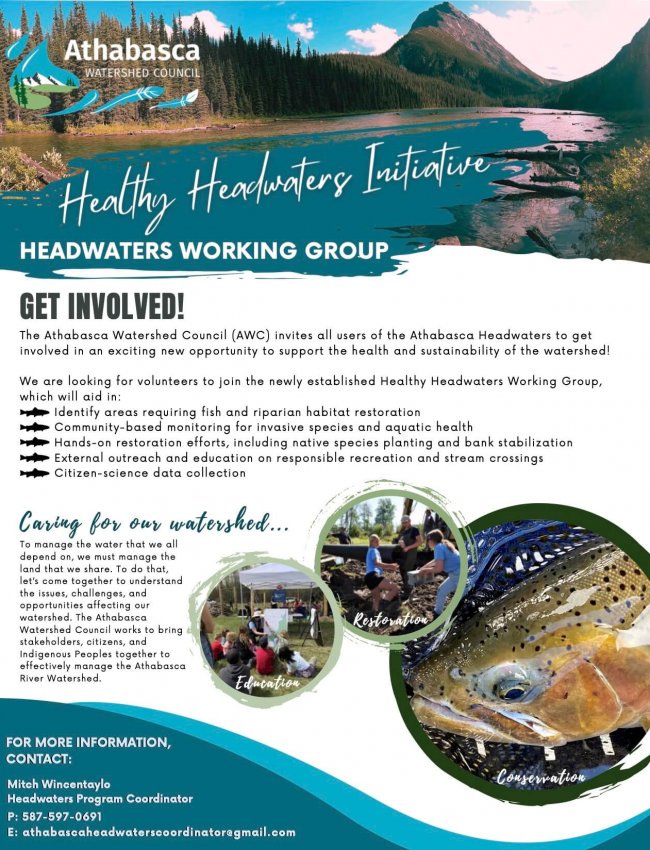
AWC Headwaters Call-Out Poster

The Athabasca Waterhsed Council (AWC) invites all users of the Athabasca Headwaters to get involved in an exciting new opportunity to support the health and sustainability of the watershed.

AWC has formed a working group with includes various environmental, industry, government, and community representatives who live, work, and play within the headwater basins. This working group is away for us to communicate updates, learn about potential impacts, gain better insights of concerns, and to share ideas among those who live in the region.

Relevant Documents:

National Biomonitoring Program: CABIN

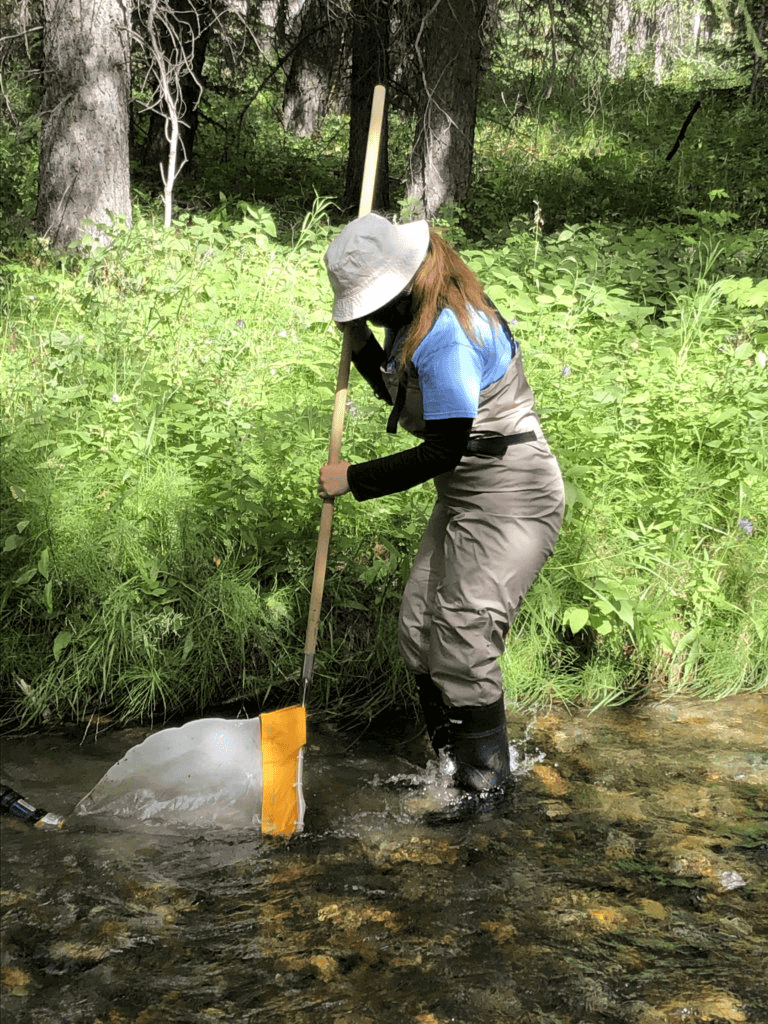
See our Benthic Program in Action!

Training and Financial Support

Monitoring Alberta’s Eastern Slopes

AWC's and ABI Environmental Taxonomy Reports:

AWC’s and ABI Environmental Taxonomy Reports:

This project is financially supported by

The headwaters region encompasses Yellowhead, Woodlands and Brazeau Counties as well as Jasper National Park – all of which host vast areas of recreational use, from angling and hunting to hiking and ATV trails. Responsible recreation is everyone’s responsibility, and if done in an irresponsible manner, can have detrimental results to local flora and fauna.  

ATV/UTV usage can cause one of the largest impacts to watercourses, with trails and crossings impeding fish movement, destroying sensitive riparian areas, introducing invasive plant species, and causing erosion issues along streambanks.  

For more information on responsible recreation and how you can help keep our streams cool, clean and connected, check out these links: 

Watercourse Crossings

The headwaters region includes various stream crossings, either for roadways, industry, or ATV/UTV use. Crossings, if not properly designed and maintained, can obstruct fish passage and mobility, leading to habitat fragmentation and a decline in reproductive success. 

There are hundreds of degraded watercourse crossings throughout the watershed, and to mitigate the impacts to fish populations, various organizations and industry partners are working on corrective action. See the links below to learn what is currently being done to rehabilitate watercourse crossings and how you can help! 

The Athabasca Watershed is home to various aquatic species at risk, including Bull Trout, Athabasca Rainbow Trout, and Arctic Grayling. The major causes for the decline in population of these species have been due to habitat degradation and fragmentation from industrial development, infrastructure, agriculture, and recreation (angling mortality and pressure). The Athabasca Watershed Council along with various partners and agencies work closely together to enhance aquatic ecosystems throughout the watershed in order to mitigate pressures on fish populations, as well as restore critical habitat for species at risk.

Learn more about impacted populations and how you can help with species recovery and conservation:

Aquatic and Terrestrial Invasive Species

Invasive species, whether they be terrestrial or aquatic, all have detrimental impacts on local biodiversity and overall health of the environment. The introduction of non-native species creates increased pressure on native flora and fauna through competition for food and resources, introduction of diseases, and the loss of habitat.  


Its important to understand and identify non-native species, and to follow responsible recreation and travel practices such as cleaning boots inbetween travel to different areas (so as not to spread seeds), disinfecting and cleaning waders in-between waterbodies to prevent the spread of Whirling Disease, cleaning, draining and drying your watercraft in-between waterbodies, and reporting all findings of invasive species through the EDDMaps app or to the local municipality.  


Remember, never introduce aquarium animals (fish, mussels, etc) into stormwater ponds or any waterbody, never transport fish or other organisms from one waterbody to another, and never plant invasive or non-native plant species that could inadvertently spread and compete with local biodiversity.  


For more information, please visit the resources below on how you can help fight against invasive species in Alberta:

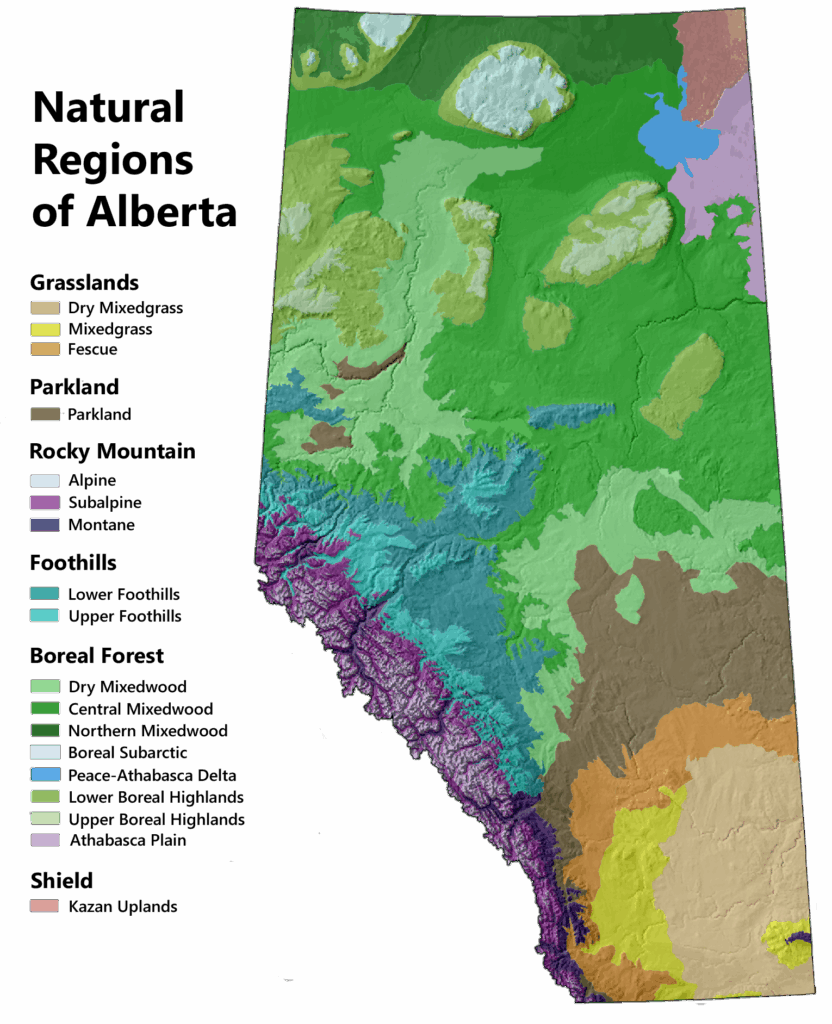
A map of the natural regions of alberta, including grasslands, parkland, rocky mountain, foothills, boreal forest, and canadian shield
Natural Regions of Alberta, Nature Alberta

This Athabasca headwaters region encompasses the Eastern Slopes, foothills, and boreal forest, and hosts a diverse mixture of land uses and pressures from recreation, as well as industries such as oil and gas, agriculture, mining, and forestry. With many at-risk aquatic species calling these sub-basins home, it’s imperative that we maintain and improve habitat to ensure not only their success but the overall health of communities that rely on water sources in these regions. Through our Healthy Shorelines Initiative, we continually assess shorelines and prioritize restoration for impacted areas, which may include exclusion fencing, willow staking, tree planting and land use planning with property owners.  

The Athabasca Watershed Council connects with property owners, industry proponents, Indigenous, Federal, Provincial and municipal governments, community members and local organizations that are active within these regions, to work together collaboratively and efficiently to identify: 


  • Degraded riparian habitats which could be candidates for restoration activities,  
  • Improvement of fish habitat and riparian habitat along fish bearing streams,  
  • Identify potential fish barriers and degraded/obstructed watercourse crossings,  
  • Provide greater education and engagement around watershed health, responsible recreation, responsible angling, and community involvement in watershed stewardship, 
  • Coordinate greater communication and liaise between levels of governments, community organizations and industry partners 
  • Ensure the health of the watershed as a whole is improved upon and maintained, and work within the Water for Life strategy 
  • Provide educational opportunities, training, and workshops to ensure the health and vitality of the watershed is maintained and/or restored 
 
 
For more information on our partner organizations and other ENGOs working to conserve and protect the watershed, check out our resources page here (https://athabascawatershed.ca/resources-and-relevant-organizations/ ) 
 
If you or your organization would like to learn more about the headwaters initiative, would like to become involved in upcoming projects, or have potential restoration projects in the region, please contact the Headwaters Project Coordinator at mitch@athabascawatershed.ca 

Click Here to Learn More

Learn more about our partner organizations and other ENGOs working to conserve and protect the Athabasca Watershed.

Click Here to Learn More

Learn more about the Upper Athabasca Surface Water Quality Management Framework.

Have a project in mind? Get in touch!

If you or your organization would like to learn more about the Headwaters Initiative, would like to become involved in upcoming projects, or have potential restoration projects in your region, please contact the Headwaters Project Coordinator at: mitch@athabascawatershed.ca